Monday, 20 April 2020

Monkey Puzzle

This lesson is designed with teaching the parts of animals in mind. It would be good as an ESL lesson but probably even better if used in conjunction with a unit on animal classification. Children love saying "No, no, no!" along with the book and the author and illustrator are the same as the fabulous Gruffalo stories.
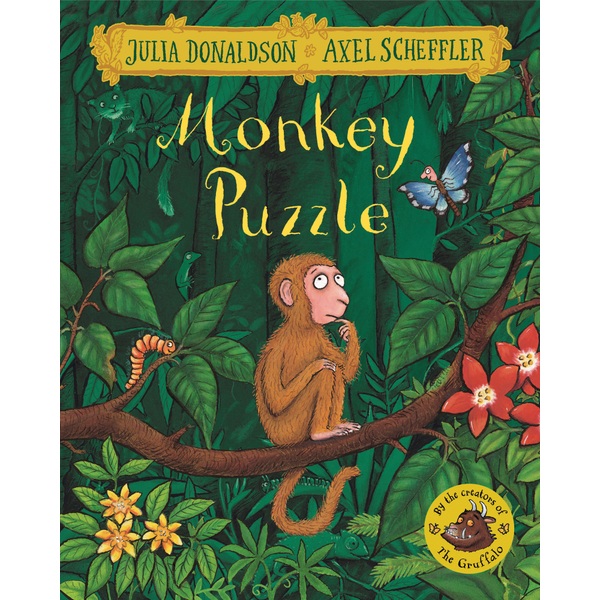


Topic: A butterfly tries to help a little monkey find its mum but they meet many different animals along the way before they find her.

Age: 4 -7 will benefit the most from the lesson plan but younger children would certainly enjoy it because of it's family setting.


Key Vocabulary: The following words are most useful if leading onto a discussion about animal kingdoms and classification: tail, wings, beak, tusks, trunk, claws, feathers, hairy or furry, slimy, a nest of eggs.


Procedure:


  • I would start with something to pique the children's interest and get them guessing what animal the story might be about. It could be as simple as this:

Cardboard Keyhole Cutout 


  • Next explain that today we will be learning about different types of animals and that there are some important words that we need to know in order to understand the story.  Using flashcards drill the pronunciation and come up with some actions together to represent the words. Play some flashcard games until children are comfortable saying and understand most of the words.


Own Made Flashcards


  • Read the story and elicit the words from the flashcards as you go. 
  • Do a table-time extension to consolidate the learning if you have time.
  • Repeat the story on different days, with different extensions to review the vocabulary. You can discuss how you know if each animal is a mammal, reptile, bird, fish etc... if you are tying this story into animal classification.


Extensions: 

If you have an interactive whiteboard or a large computer screen there are some lovely games and resources on Sheppardsoftware.com for teaching animal classification. I have even used these with middle school students but they are suitable for Primary.
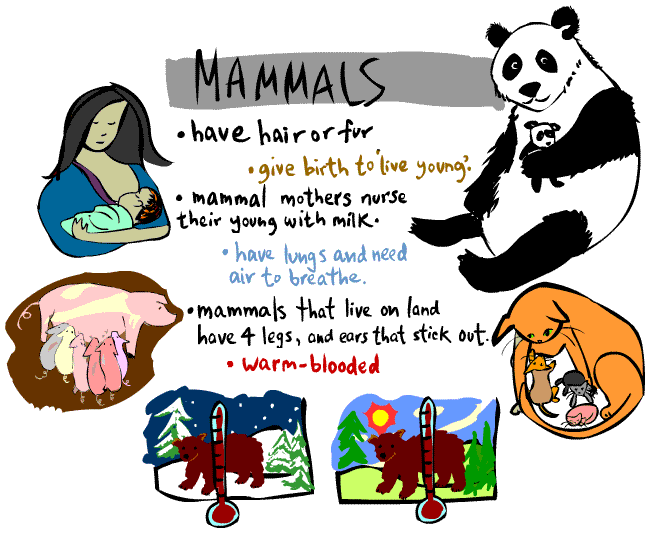
Sheppardsoftware.com

A sorting game with animals to cut out and stick into the right columns would be a fantastic way to check students' understanding.

Here


This video does a great job of teaching the difference between fur, hair, feathers, scales and skin.

 This is a fun song asking children to guess whose is the tail and it's suitable for preschoolers too.


A great art activity is to get children to invent their own animals and label or describe them using the correct vocabulary. 

They can also do this collaboratively in threes by secretly drawing the head and neck, folding it back and passing it to a partner who draws the body and the tops of the legs and then folds it back and passes it on to another friend who secretly draws the legs and feet. When they unfold them you generally get a lot of laughs and children enjoy describing and coming up with names for their new animals.
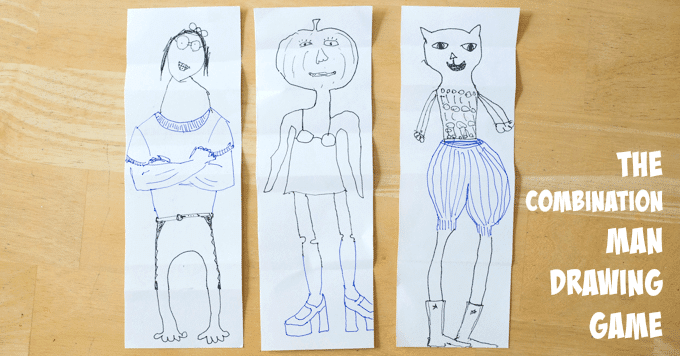
Like THIS but with animals!


Tuesday, 15 January 2019

Charlie Chick

Charlie Chick is a delightful pop up book, good for the end of the year when attentions are getting short as it's short but sweet, with nice large images for using in class. Or you could use it at Easter time as there are plenty of chick themed crafts out there.

Charlie Chick by Nick Denchfield and Ant Parker for Campbell 


Topic: A hungry chick eats lots of corn and gets a great big tummy. Good for using in conjunction when teaching parts of the body or reviewing.

Age: 2-5. I think only your youngest students will fully appreciate the book.

Vocabulary: mum, "Charlie Chick eats lots of barley/corn/wheat", "That's why he's got such... big/fat/strong, tummy, beak, feet"

Procedure:

  • Get your students sitting in their circle time positions and sing your Hello Song. I would sing it with a tiny voice and a great big voice in keeping with the books theme.
  • Gather interest: See how many part of the body the students know in English already/can remember. Drill the main parts of the body like arms, legs, hands, head making sure to include feet and tummy. Then show them the book front cover and teach eyes and beak. Test them by getting them to point to the different parts of their body when you say the word. Alternatively you could ask them to guess which farmyard animal today's story is about.
  • Read the story to the students, (make sure to build some suspense before opening the pop up pages!) and elicit the parts of the body. Repeat once or twice more.
  • Set up your table time extension activity. 
  • Get your students back into circle time and sing Old MacDonald had a farm or Heads, Shoulders, Knees and Toes.
  • You could finish with the video of Old Mac Donald, the following is faithful to the version that most people learnt as a child, or a more calming Animal Sounds Song by Kids TV 123.


Extensions:

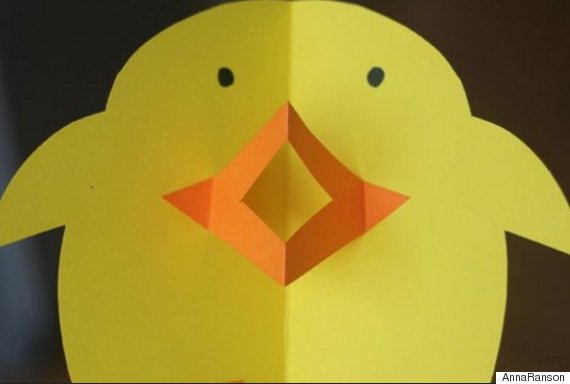
Cute and Easy Pop Up Chic Cards. We do love a simple pop up card and these chicks are just the ticket. They make great 3d Easter Cards, but can also be adapted for Birthdays or even Valentines #popupcards #popup #chick #chicken #spring #cardmaking
Pop up chick card HERE
easter
Another pop up card HERE
If that feels a bit ambitious you could always plump for some colouring. Get your fast finishers to add Charlie chick's mum and a pile of corn! Or you could do a colouring dictation and ask your students to colour the chicks beak, eyes, tummy and feet the colours you say.

Click on THIS LINK to download the free Easter colouring sheets or the following worksheet.

Don't forget to count your chickens after they hatch :)

There are other books in the Charlie Chick series which also look fun for doing with ESL children. A good story to follow with would be Little Red Riding Hood.

Tuesday, 22 May 2018

Dear Zoo

Dear Zoo is a firm family favourite that has recently celebrated 35 years of publishing. Small children love opening the flaps making it ideal for individual or small group lessons. For a bigger class it is a bit more of a challenge as the pages are fairly small, but the illustrations are nice and clear.

See the source image


Topic: The narrator writes to the zoo in order to adopt a pet but the zoo keeps sending unsuitable animals.


Age: 1-5 (Yes, even one year olds will enjoy this book. I'm not sure how much English they will produce though!)

Vocabulary:
Zoo, pet, lion, elephant, giraffe, snake, monkey, frog, camel, puppy. 
Too big, too tall, too fierce (or substitute with dangerous), too grumpy, too scary, too naughty, too jumpy, perfect.
For phrases like "I sent him back" and "I kept him" I would mime the action and chunk it rather than teach the individual words.

Procedure:

  • Get your students into their circle time positions and sing your Hello Song in the style of a snake, roar it like a lion or even in the style of a grumpy camel.
  • Flashcard time: drill the animals in the story, you can choose whether to include puppy or not for the first reading. Sometimes it is nice to maintain an element of surprise. You can find flashcard game ideas HERE. If your students already know these animals then drill the adjectives instead, with flashcards or by miming.
  • Interest gather by asking the students if they have any pets. What would their ideal pet be?
  • Read the story, before opening the flaps elicit what animal is on the inside of the box. Encourage the students to repeat the phrases "He was too ..." and "I sent him back" after you. 
  • Give the instructions for your 'table time' worksheet activity. For example, see if the students know which colours to colour the animals on the worksheet.
You can find the full colouring sheet on the publisher's website HERE.
  • When the children have finished their colouring (fast finishers could draw and colour a few animals of their own on the back) get the children back into circle time and admire any particularly nicely coloured worksheets. 
  • If the students have been good listeners there should be time to reward them with a video. Try this Zoo song by Super Simple Songs.


Extensions:

Test their memory with this worksheet.

HERE

Or this one...

From Sparklebox HERE


How about a, cut out and  order the animals in terms of size worksheet.


See the source image
HERE


Or play Sleeping lions  - every teacher's favourite party game! Students must lie down and pretend to be sleeping lions. The first ones to move are eliminated. Another version of the game sees students lie down and sleep, they are given an animal, when the music plays they must wake up and be that animal, when it stops they must go to sleep again, then they are given a new animal.


Similar: This story could work well in conjunction with the following books: Dinosaur Roar, The Photo, Spot's Birthday Party, and Walking in the Jungle.