Showing posts with label farm animals. Show all posts

Tuesday, 15 January 2019

Charlie Chick

Charlie Chick is a delightful pop up book, good for the end of the year when attentions are getting short as it's short but sweet, with nice large images for using in class. Or you could use it at Easter time as there are plenty of chick themed crafts out there.

Charlie Chick by Nick Denchfield and Ant Parker for Campbell 


Topic: A hungry chick eats lots of corn and gets a great big tummy. Good for using in conjunction when teaching parts of the body or reviewing.

Age: 2-5. I think only your youngest students will fully appreciate the book.

Vocabulary: mum, "Charlie Chick eats lots of barley/corn/wheat", "That's why he's got such... big/fat/strong, tummy, beak, feet"

Procedure:

  • Get your students sitting in their circle time positions and sing your Hello Song. I would sing it with a tiny voice and a great big voice in keeping with the books theme.
  • Gather interest: See how many part of the body the students know in English already/can remember. Drill the main parts of the body like arms, legs, hands, head making sure to include feet and tummy. Then show them the book front cover and teach eyes and beak. Test them by getting them to point to the different parts of their body when you say the word. Alternatively you could ask them to guess which farmyard animal today's story is about.
  • Read the story to the students, (make sure to build some suspense before opening the pop up pages!) and elicit the parts of the body. Repeat once or twice more.
  • Set up your table time extension activity. 
  • Get your students back into circle time and sing Old MacDonald had a farm or Heads, Shoulders, Knees and Toes.
  • You could finish with the video of Old Mac Donald, the following is faithful to the version that most people learnt as a child, or a more calming Animal Sounds Song by Kids TV 123.


Extensions:

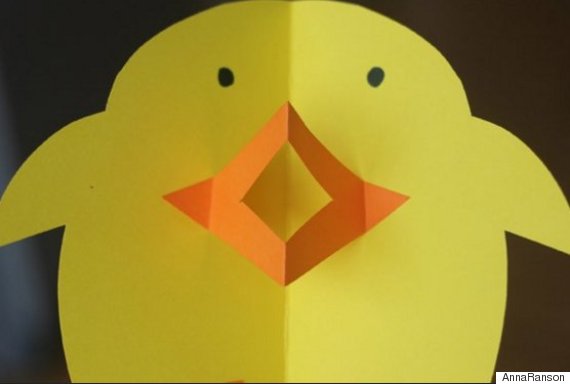
Cute and Easy Pop Up Chic Cards. We do love a simple pop up card and these chicks are just the ticket. They make great 3d Easter Cards, but can also be adapted for Birthdays or even Valentines #popupcards #popup #chick #chicken #spring #cardmaking
Pop up chick card HERE
easter
Another pop up card HERE
If that feels a bit ambitious you could always plump for some colouring. Get your fast finishers to add Charlie chick's mum and a pile of corn! Or you could do a colouring dictation and ask your students to colour the chicks beak, eyes, tummy and feet the colours you say.

Click on THIS LINK to download the free Easter colouring sheets or the following worksheet.

Don't forget to count your chickens after they hatch :)

There are other books in the Charlie Chick series which also look fun for doing with ESL children. A good story to follow with would be Little Red Riding Hood.

Monday, 13 January 2014

The Three Billy Goats Gruff

The Three Billy Goats Gruff is a great story for group storytelling whether with pictures or without. The range of voices and repetitive speech is perfect for VYL but also older kids. I have done this with 7-8 year olds who loved it nearly as much as the 4 year olds.

This version gets 5 stars on Amazon

Topic: Three goats want to cross a bridge but an angry, hungry troll wants to eat them.

Age: 4-8

Vocabulary: Goat, troll, bridge, big, middle/medium, small, angry, hungry (I like to add thirsty to the lesson) 'Who's that tippy tapping on my bridge?' 'I'm hungry and I'm going to eat you.' 'Please don't eat me!'

Procedure:


  • Sing If You're Happy and You Know It to review/introduce the adjectives happy, angry, hungry and thirsty. Suggested lyrics: If you're happy happy happy, clap your hands. If you're hungry hungry hungry, eat a banana. If you're thristy thirsty thristy, drink some water. If you're angry angry angry, stamp you're feet. If you're happy happy happy, shhh be quiet!"
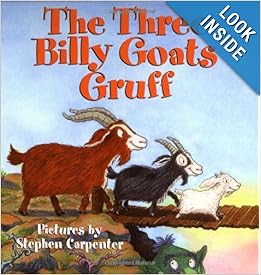
  • Introduce the story using the front cover. Count the goats. Show how there was BIG goat, middle goat and small goat using gestures. Start the story. The goats are hungry and they want to eat the long green grass, BUT under the bridge there lives an angry, hungry troll who likes to eat goats.
  • The small goat goes first. Get everyone to tap the noise of the goat's hooves on the floor/tables lightly. STOP roars the troll. "Who's that tippy tapping on my bridge?" I say this twice whilst clapping it encouraging the children to repeat with me. Now squeaky voice for the small goat. "It's me! Small goat." On later tellings I elicit the word small from the students. Big booming voice again and rub your tummy. "I'm hungry and I'm going to eat you!" Clap it out and repeat twice, whilst encouraging the children to say it with you. Back to small goat, who squeaks with hands praying. "Please don't eat me!" (Children must repeat this bit really well  or the troll is not satisfied ;). I finish the conversation"I'm only small. Wait for my brother, middle goat. He's much bigger than me!" "Ok go ahead" grumbles the troll.
  • Repeat for middle goat. Big goat arrives and speaks with a BIG voice and on cue says! "Oh no you won't." Then with your hands gesture the horns and charge. SPLASH the troll falls into the water and is swept away. The goats are happy and eat lots of grass. The small goat becomes a BIG fat goat. If you have the Steven Carpenter version then go around and point out the the troll floating away down the river, because he's very small.

Extensions:

This makes a great worksheet for all VYL, although the four year olds will need help to complete it.


In follow up lessons I drew a bridge and photocopied it and the students added the characters for me.

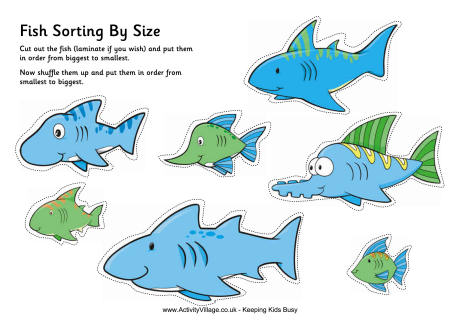
Another great activity is a sorting activity with shells, buttons, bottle caps or other objects into the three categories or big, medium an small.


If a worksheet seems easier then make a photocopy with three boxes of different sizes and ask them to draw something big, small and medium sized in the right box.


I've watched a lot of 3 Billy Goats Gruff videos on Youtube and this was my favourite. The children won't understand much of the speech but the drawings and music are lovely. The students have all got very involved when watching this video.

Saturday, 23 November 2013

Incey Wincey Spider

Incey Wincey Spider, the nursery rhyme, is a favourite with TEFL teachers. It already comes with hand gestures and online videos and pictures galore. What you may not know though, is that there are also Incey Wincey Spider story books out there by Keith Chapman and Jack Tickle, with Incey Wincey spider as the main character.

In this book, our little spider gets sent flying by a gust of wind and meets all sort of different farm animals on his journey. The pages are big and the silk webs are glittery making them fun to follow with your finger.


Age: 4-6 It was a big hit with the four year olds.

Language points:

The nursery rhyme features the rain and the sun, so it can be a good idea to teach other weather nouns too. I chose wind, as it's in the book, but it could be a good idea to teach  snow and clouds too. The book features the farm animals cow, horse, cockerel (I used chicken instead) goat, duck and pig.

It's also good for reviewing the animal noises and colours.


Procedure:

Start the lesson by teaching the types of weather plus the words 'incey wincey spider' and 'water spout.' Play the say yes when you see the.... game (jump for yes, twist for no) and drill actions. You could also play simon says.

Slowly say the words and demonstrate the actions. Encourage children to do the actions for you. This video shows you how.


  • Read the story, encouraging children to say the names of the animals and make the noises with you. (I didn't do the story in the first lesson as I focussed on the rhyme, but in my second and third).
  • Table time: I drew a picture of a spider web next to a water spout and the children had to draw the spider and colour it in. This was a big hit.
  • Drill the rhyme again and encourage the older children especially, to join in with the words. It could be a good time to introduce the melody too.
  • Watch the video with the children.


Extensions:

Draw pictures with different skies, windy, snowy, sunny and rainy for example. I gave my students a worksheet with four different houses and the words to trace underneath. I drew a girl outside wearing appropriate clothes for each sky to help comprehension.

or:

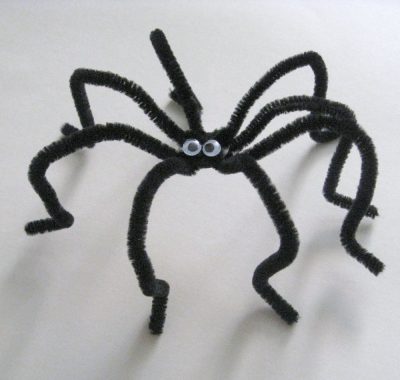
Pipe cleaner spider craft, if you have enough pipe cleaners!

Googly eyes optional...

Complete with water spout for reenactments!

It's also possible to go back and use those songs and videos from the Old Mac Donald Had a Farm lesson as revision. Recycle, recycle, recycle!

Tuesday, 8 October 2013

Old MacDonald Had a Farm

Age: 4-6 years

Language: Hello/ How are you/ I'm fine thank you/ Animal vocab: Dog, cow, horse, sheep, chicken, farm.

Procedure:

  1. Drill Hello, How are you and I'm fine thank you. Check meaning.
  2. Sing Hello song.  (Hello, hello, how are you? I'm fine thank you I'm fine thank you, hello hello hello - to the tune of "Hi Ho Hi Ho"). 
  3. Take your animal flashcards and put them behind an A4 card 'door' with keyhole cut out in the middle. Students guess the animals. Say hello to the animal, ask the kids to ask the animal "how are you?" and reply in the animals voice, for example bleating 'I'm fine thank you'. Then get the kids to repeat. I put a scary dog behind the last one who we have to slam the door shut on and scream. 
  4. Get the kids standing up and dancing to Old MacDonald had a farm. Sing it without the music first and sing it slowly. 

Old MacDonald had a farm (hold onto your braces and bob from side to side)
EIEIO (do windscreen wiper hands)
And on that farm he had a -elicit flashcard- (hold onto your braces and bob from side to side)
EIEIO (do windscreen wiper hands)
-Elicit noise the animal makes-
eg. woof woof woof. woof woof woof. woof. woof. woof woof woof. (The kids cannot sing the full version so just make the noises along with the rythm. 

Old MacDonald had a farm (hold onto your braces and bob from side to side)
EIEIO (do windscreen wiper hands)

5. Play the start of the video. What animals can they hear?
6. Play the whole video, pausing every time a new animal starts to appear.
7. Sing along.


Extensions:

Draw and number six fields with a farm in the middle and do a listening dictation. Eg. "Draw a cow in number 3". This will be difficult for them so leave some fields for their imaginiation, and divide the activity over two lessons.

Match halves of the animals worksheet. 

Teach pig and duck. Play musical statues 'walking around the farm' (I do it on the spot in a small figure of 8) in the style of the different animals to this song. Introduce this phase by talking about the concept of 'dance bubbles', in that noone can leave their own or enter other people's!

Then show them the video and encourage them to join in.