Showing posts with label Old McDonald Had a Farm. Show all posts

Tuesday, 15 January 2019

Charlie Chick

Charlie Chick is a delightful pop up book, good for the end of the year when attentions are getting short as it's short but sweet, with nice large images for using in class. Or you could use it at Easter time as there are plenty of chick themed crafts out there.

Charlie Chick by Nick Denchfield and Ant Parker for Campbell 


Topic: A hungry chick eats lots of corn and gets a great big tummy. Good for using in conjunction when teaching parts of the body or reviewing.

Age: 2-5. I think only your youngest students will fully appreciate the book.

Vocabulary: mum, "Charlie Chick eats lots of barley/corn/wheat", "That's why he's got such... big/fat/strong, tummy, beak, feet"

Procedure:

  • Get your students sitting in their circle time positions and sing your Hello Song. I would sing it with a tiny voice and a great big voice in keeping with the books theme.
  • Gather interest: See how many part of the body the students know in English already/can remember. Drill the main parts of the body like arms, legs, hands, head making sure to include feet and tummy. Then show them the book front cover and teach eyes and beak. Test them by getting them to point to the different parts of their body when you say the word. Alternatively you could ask them to guess which farmyard animal today's story is about.
  • Read the story to the students, (make sure to build some suspense before opening the pop up pages!) and elicit the parts of the body. Repeat once or twice more.
  • Set up your table time extension activity. 
  • Get your students back into circle time and sing Old MacDonald had a farm or Heads, Shoulders, Knees and Toes.
  • You could finish with the video of Old Mac Donald, the following is faithful to the version that most people learnt as a child, or a more calming Animal Sounds Song by Kids TV 123.


Extensions:

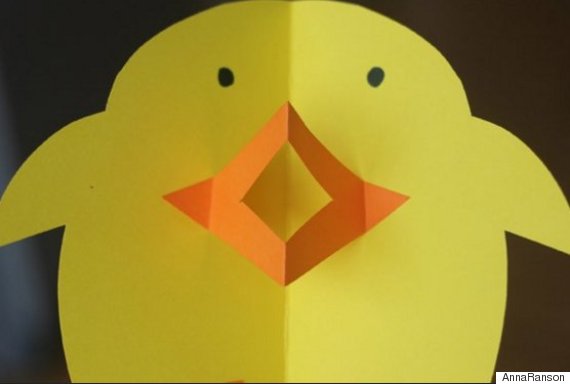
Cute and Easy Pop Up Chic Cards. We do love a simple pop up card and these chicks are just the ticket. They make great 3d Easter Cards, but can also be adapted for Birthdays or even Valentines #popupcards #popup #chick #chicken #spring #cardmaking
Pop up chick card HERE
easter
Another pop up card HERE
If that feels a bit ambitious you could always plump for some colouring. Get your fast finishers to add Charlie chick's mum and a pile of corn! Or you could do a colouring dictation and ask your students to colour the chicks beak, eyes, tummy and feet the colours you say.

Click on THIS LINK to download the free Easter colouring sheets or the following worksheet.

Don't forget to count your chickens after they hatch :)

There are other books in the Charlie Chick series which also look fun for doing with ESL children. A good story to follow with would be Little Red Riding Hood.

Wednesday, 12 February 2014

Pete the Cat - I Love my White Shoes

If you haven't heard of Pete the Cat, you need to know that you need him and his enigmatic little face in your lessons! Pete the Cat I Love My White Shoes is a book by Eric Litwin and James Dean, published by Harper Collins. It has serious cool factor, which is why you could do it with kids up to 8 (at least).


Topic: A cat with white shoes who steps in different things and turns his shoes different colours. Pete doesn't mind. He just keeps on walking and singing his song. There are plenty of videos on youtube with the song so you can hear it and sing it as you tell it.

Age: 3-8

Vocabulary: verbs (sing, walk, cry) colours (red, blue, brown, white) fruit (strawberries, blue berries) and other: wet, water, mud "oh no!" "it's all good", "goodness no!"

Procedure:


  • Sing your hello song happily and sadly (or for variety, whilst crying and laughing!)
  • Pre-teach the verbs with a game of simon says, or with simple commands.
  • Drill the substances with flashcards. Say yes when, is a good game to check they know which one is which. 
  • Tell the story with the book. If you can clap the rhythm out. It's a tricky one to do, but the beat is very cool. Some teachers can get it others can't, but I would strongly suggest you watch the live story telling to see how it's done by the masters themselves.
  • Activity time! Have the children think of another type of fruit that Pete could step in and say what colour it would make his shoes. Give them a picture of Pete with shoes on and they draw a pile of fruit under him and colour his shoes the right colour. If that seems too challenging, then you could draw different types of fruit under pete and get them to do a simple colouring exercise.
A simpler version of this. A ton of ideas here.
  • Finish the lesson with a song. I've written this song to the tune of Here We Go Round the Mulberry Bush. It reviews the verbs of the story and adds a couple of other common ones. Feel free to replace the days of the week with 'early in the morning' but I'm carrying on from The Very Hungry Caterpillar, so for me it makes sense. With the youngest students I would definitely reduce the number of verses and stick to the crucial ones.

(Here we go round the Mulberry bush, the Mulberry bush, the Mulberry bush,
Here we go round the Mulberry bush, the Mulberry bush, the Mulberry bush,
so early in the morning.)

This is the way we walk to school, walk to school, walk to school.
This is the way we walk to school, walk to school, walk to school,
on a Monday morning.

This is the way we run and stop, run and stop, run and stop
on a Tuesday morning.

This is the way we sing a song, sing a song, sing a song,
on a Wednesday morning.

This is the way we cry and cry, cry and cry, cry and cry,
on a Thursday morning.

This is the way we wash our hands, wash our hands, wash our hands,
on a Friday morning.

This is the way we jump and skip, jump and skip, jump and skip,
on a Saturday morning.

This is the way we sit in church, sit in church, sit in church,
on a Sunday morning. (ie. quietly!)


Extensions:

The Harpercollins site has a printable worksheet here, where the kids can decorate their own pair of canvas trainers.


Colour by numbers - Here


Here's video made from the pictures in the book to reenforce the story.


You can even review Old Mac Donald Had a Farm with Pete the Cat.


And finally, for those of you with resources you could make a craft like this:


Or even this!


Tuesday, 8 October 2013

Old MacDonald Had a Farm

Age: 4-6 years

Language: Hello/ How are you/ I'm fine thank you/ Animal vocab: Dog, cow, horse, sheep, chicken, farm.

Procedure:

  1. Drill Hello, How are you and I'm fine thank you. Check meaning.
  2. Sing Hello song.  (Hello, hello, how are you? I'm fine thank you I'm fine thank you, hello hello hello - to the tune of "Hi Ho Hi Ho"). 
  3. Take your animal flashcards and put them behind an A4 card 'door' with keyhole cut out in the middle. Students guess the animals. Say hello to the animal, ask the kids to ask the animal "how are you?" and reply in the animals voice, for example bleating 'I'm fine thank you'. Then get the kids to repeat. I put a scary dog behind the last one who we have to slam the door shut on and scream. 
  4. Get the kids standing up and dancing to Old MacDonald had a farm. Sing it without the music first and sing it slowly. 

Old MacDonald had a farm (hold onto your braces and bob from side to side)
EIEIO (do windscreen wiper hands)
And on that farm he had a -elicit flashcard- (hold onto your braces and bob from side to side)
EIEIO (do windscreen wiper hands)
-Elicit noise the animal makes-
eg. woof woof woof. woof woof woof. woof. woof. woof woof woof. (The kids cannot sing the full version so just make the noises along with the rythm. 

Old MacDonald had a farm (hold onto your braces and bob from side to side)
EIEIO (do windscreen wiper hands)

5. Play the start of the video. What animals can they hear?
6. Play the whole video, pausing every time a new animal starts to appear.
7. Sing along.


Extensions:

Draw and number six fields with a farm in the middle and do a listening dictation. Eg. "Draw a cow in number 3". This will be difficult for them so leave some fields for their imaginiation, and divide the activity over two lessons.

Match halves of the animals worksheet. 

Teach pig and duck. Play musical statues 'walking around the farm' (I do it on the spot in a small figure of 8) in the style of the different animals to this song. Introduce this phase by talking about the concept of 'dance bubbles', in that noone can leave their own or enter other people's!

Then show them the video and encourage them to join in.