Showing posts with label colours. Show all posts

Tuesday, 10 February 2015

Pete the Cat and his Four Groovy Buttons

Pete the Cat was a huge hit with the kids last time round. The books are fantastic for group reading and involving the kids with their repetitive chants. This one was no different.


Pete loses his buttons but he never loses his cool.

Topic: numbers and colours.

Age: 3- 7 all enjoyed it.

Vocabulary: numbers 4,3,2,1 and 0, I like to do numbers 5-10 as well. Colours yellow, green, red, dark blue and light blue all easy to include too. Also skateboard, icecream, surfing and belly button. Phrases 'My buttons, my buttons, my _ groovy buttons!' and 'goodness no!'

Procedure:

  • sing your hello song. I enjoyed reviewing the emotions for this book. Sad, happy, scared, sleepy.. so we sang it in different ways.
  • Practice counting. I have a points chart so I used that. We counted up and then counted down. Then we counted on our fingers and sang this song: 1 little 2 little 3 little fingers, 4 little 5 little 6 little fingers, 7 little, 8 little 9 little fingers, 10 little fingers on my hands.
  • Now get cracking on the book. Open it up and admire the inside of the front cover. Elict the colours and count the buttons. With the older kids you can even get them to do a little maths 'How many yellow and red buttons are there?'
  • The book is so perfect you don't need me to tell you how to tell it. It is instinctive. THIS VIDEO will help you too. I get the students to clap along with the rap to get them involved. I also like to stop the rap abruptly in a different place each time by saying POP! OH NO! and slapping my forehead. They love that.
  • Table time now: elicit the colours that Pete was wearing and ask them to colour him from memory.
    Here
    • Now bring them back to the circle. Pratice counting again. Hop 3 times. Spin 2...
    • Watch the SCOPE video linked previously and get them to join in, or watch this video with Pete the Cat where he does the wheels on the bus (a song I already did with my students).


    Extensions:

    Any kind of counting video.


    We love Super Simple Songs.

     The kids all want to know if this is my boyfriend. SIGH.
    Colour by numbers HERE
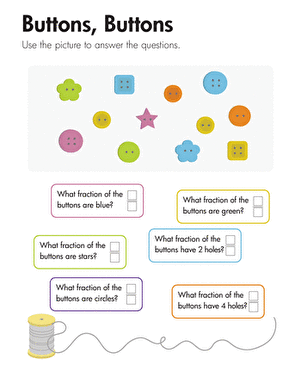
     Plus you can make many button maths worksheets like these.

    See the source image
    HERE

Wednesday, 12 February 2014

Pete the Cat - I Love my White Shoes

If you haven't heard of Pete the Cat, you need to know that you need him and his enigmatic little face in your lessons! Pete the Cat I Love My White Shoes is a book by Eric Litwin and James Dean, published by Harper Collins. It has serious cool factor, which is why you could do it with kids up to 8 (at least).


Topic: A cat with white shoes who steps in different things and turns his shoes different colours. Pete doesn't mind. He just keeps on walking and singing his song. There are plenty of videos on youtube with the song so you can hear it and sing it as you tell it.

Age: 3-8

Vocabulary: verbs (sing, walk, cry) colours (red, blue, brown, white) fruit (strawberries, blue berries) and other: wet, water, mud "oh no!" "it's all good", "goodness no!"

Procedure:


  • Sing your hello song happily and sadly (or for variety, whilst crying and laughing!)
  • Pre-teach the verbs with a game of simon says, or with simple commands.
  • Drill the substances with flashcards. Say yes when, is a good game to check they know which one is which. 
  • Tell the story with the book. If you can clap the rhythm out. It's a tricky one to do, but the beat is very cool. Some teachers can get it others can't, but I would strongly suggest you watch the live story telling to see how it's done by the masters themselves.
  • Activity time! Have the children think of another type of fruit that Pete could step in and say what colour it would make his shoes. Give them a picture of Pete with shoes on and they draw a pile of fruit under him and colour his shoes the right colour. If that seems too challenging, then you could draw different types of fruit under pete and get them to do a simple colouring exercise.
A simpler version of this. A ton of ideas here.
  • Finish the lesson with a song. I've written this song to the tune of Here We Go Round the Mulberry Bush. It reviews the verbs of the story and adds a couple of other common ones. Feel free to replace the days of the week with 'early in the morning' but I'm carrying on from The Very Hungry Caterpillar, so for me it makes sense. With the youngest students I would definitely reduce the number of verses and stick to the crucial ones.

(Here we go round the Mulberry bush, the Mulberry bush, the Mulberry bush,
Here we go round the Mulberry bush, the Mulberry bush, the Mulberry bush,
so early in the morning.)

This is the way we walk to school, walk to school, walk to school.
This is the way we walk to school, walk to school, walk to school,
on a Monday morning.

This is the way we run and stop, run and stop, run and stop
on a Tuesday morning.

This is the way we sing a song, sing a song, sing a song,
on a Wednesday morning.

This is the way we cry and cry, cry and cry, cry and cry,
on a Thursday morning.

This is the way we wash our hands, wash our hands, wash our hands,
on a Friday morning.

This is the way we jump and skip, jump and skip, jump and skip,
on a Saturday morning.

This is the way we sit in church, sit in church, sit in church,
on a Sunday morning. (ie. quietly!)


Extensions:

The Harpercollins site has a printable worksheet here, where the kids can decorate their own pair of canvas trainers.


Colour by numbers - Here


Here's video made from the pictures in the book to reenforce the story.


You can even review Old Mac Donald Had a Farm with Pete the Cat.


And finally, for those of you with resources you could make a craft like this:


Or even this!


Thursday, 30 January 2014

The Very Hungry Caterpillar

The Very Hungry Caterpillar by Eric Carle is a much loved and much translated book, that your students may even have at home already. Students 4-6 love this book for the final transformation.

The paperback version has nice large images that the children at the back can see well and the holes in the pages just add to the magic.
Available on Amazon
Topic: The lifecycle of a butterfly (oh no, I didn't spoil the ending for you did I? You knew he turns into a butterfly, right?)

Age: 4-7years (There's a lot of good recyclable vocabulary here, so you could make it work for older students too)

Vocabulary: Fruit (apple, pears, plums, strawberries, oranges, watermelon). Older kids could also learn or review food items, sausage, salami, cake, cheese, lollypop, pickle, ice cream and pie. Numbers 1-5. Days of the week. Lifecycle stages (egg, caterpillar, cocoon/chrysalis, butterfly). Also sun and moon and the adjectives tiny, small, big, fat and hungry.

Procedure:


  • Sing your hello song hungrily and thirstily, or even more fun, pretend to be very big (slowly and loudly), small and then tiny (fast and squeakily).
  • Preteach the flashcards of the fruit or food depending on what your students know already. For the 4 year olds the five main fruits is really the maximum you can hope for them to learn at a time.
  • Get the students settled and listening. Let them know how you will indicate when you need their help. You can tell the story using the words in the book as they are already very simple. Add gestures for hungry, tiny, big fat, stomach ache and much better. As you say the days of the week, see if they know them in L1. It's cross curricular and the chances are they will be learning them currently. I like to get the children to count out the fruit with me and tell me the colour and the name of it to get them as involved as possible.
  • When the caterpillar makes a cocoon/chrysalis, it might be a good idea to use some L1, as many of the students will be convinced it is a poo! I also ask them how long they think the caterpillar stayed in there for in L1, to get them thinking and build up the suspense for the inevitable transformation.
  • As a final activity I get them to tell me all the colours they can see in the butterfly's wings. 
  • Then they can do this beautiful colouring sheet. From memory they have to colour all the fruits the right colour (warning this takes a long time to finish)!

Available on Eric Carle's website.

Extensions:
  • Tell the story again, pre-teaching and then eliciting the life cycle stages. Ask volunteers to reorder the flashcards for you and then put them in the right order. There are many worksheets out there:


There are many worksheets out there...


  • This video is a nice way to review that language (probably stop at 2.45mins)

  • Butterfly colouring sheets are out there in abundance, or they can draw their own. Don't forget the old classroom favourite of painting half a butterfly on one half of an A4 piece of paper, folding it shut and then peeling it open again. Remember to use poster paints (or acrylics but they don't wash out) not tray paints. 
  • This lullaby is a good settler for the end of the lesson.
  • The days of the week chant to the Adams Family. Days of the week *clap clap* days of the week *clap clap* days of the week, days of the week, days of the week *clap clap* There's Sunday and Monday, Tuesday and Wednesday, Thursday and Friday and then there is Saturday. Days of the week *clap clap* days of the week *clap clap* days of the week, days of the week, days of the week *clap clap.* The key thing is to remember to start with Sunday or the rhythm doesn't work.
  • This worksheet even has a caterpillar theme!


Saturday, 23 November 2013

Incey Wincey Spider

Incey Wincey Spider, the nursery rhyme, is a favourite with TEFL teachers. It already comes with hand gestures and online videos and pictures galore. What you may not know though, is that there are also Incey Wincey Spider story books out there by Keith Chapman and Jack Tickle, with Incey Wincey spider as the main character.

In this book, our little spider gets sent flying by a gust of wind and meets all sort of different farm animals on his journey. The pages are big and the silk webs are glittery making them fun to follow with your finger.


Age: 4-6 It was a big hit with the four year olds.

Language points:

The nursery rhyme features the rain and the sun, so it can be a good idea to teach other weather nouns too. I chose wind, as it's in the book, but it could be a good idea to teach  snow and clouds too. The book features the farm animals cow, horse, cockerel (I used chicken instead) goat, duck and pig.

It's also good for reviewing the animal noises and colours.


Procedure:

Start the lesson by teaching the types of weather plus the words 'incey wincey spider' and 'water spout.' Play the say yes when you see the.... game (jump for yes, twist for no) and drill actions. You could also play simon says.

Slowly say the words and demonstrate the actions. Encourage children to do the actions for you. This video shows you how.


  • Read the story, encouraging children to say the names of the animals and make the noises with you. (I didn't do the story in the first lesson as I focussed on the rhyme, but in my second and third).
  • Table time: I drew a picture of a spider web next to a water spout and the children had to draw the spider and colour it in. This was a big hit.
  • Drill the rhyme again and encourage the older children especially, to join in with the words. It could be a good time to introduce the melody too.
  • Watch the video with the children.


Extensions:

Draw pictures with different skies, windy, snowy, sunny and rainy for example. I gave my students a worksheet with four different houses and the words to trace underneath. I drew a girl outside wearing appropriate clothes for each sky to help comprehension.

or:

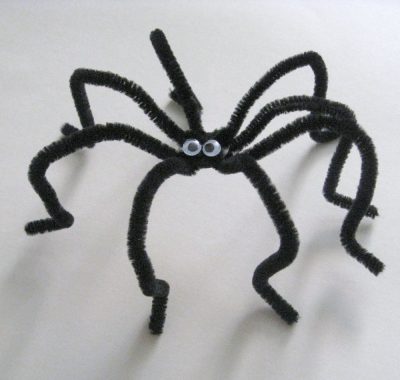
Pipe cleaner spider craft, if you have enough pipe cleaners!

Googly eyes optional...

Complete with water spout for reenactments!

It's also possible to go back and use those songs and videos from the Old Mac Donald Had a Farm lesson as revision. Recycle, recycle, recycle!