Showing posts with label craft. Show all posts

Saturday, 23 November 2013

Incey Wincey Spider

Incey Wincey Spider, the nursery rhyme, is a favourite with TEFL teachers. It already comes with hand gestures and online videos and pictures galore. What you may not know though, is that there are also Incey Wincey Spider story books out there by Keith Chapman and Jack Tickle, with Incey Wincey spider as the main character.

In this book, our little spider gets sent flying by a gust of wind and meets all sort of different farm animals on his journey. The pages are big and the silk webs are glittery making them fun to follow with your finger.


Age: 4-6 It was a big hit with the four year olds.

Language points:

The nursery rhyme features the rain and the sun, so it can be a good idea to teach other weather nouns too. I chose wind, as it's in the book, but it could be a good idea to teach  snow and clouds too. The book features the farm animals cow, horse, cockerel (I used chicken instead) goat, duck and pig.

It's also good for reviewing the animal noises and colours.


Procedure:

Start the lesson by teaching the types of weather plus the words 'incey wincey spider' and 'water spout.' Play the say yes when you see the.... game (jump for yes, twist for no) and drill actions. You could also play simon says.

Slowly say the words and demonstrate the actions. Encourage children to do the actions for you. This video shows you how.


  • Read the story, encouraging children to say the names of the animals and make the noises with you. (I didn't do the story in the first lesson as I focussed on the rhyme, but in my second and third).
  • Table time: I drew a picture of a spider web next to a water spout and the children had to draw the spider and colour it in. This was a big hit.
  • Drill the rhyme again and encourage the older children especially, to join in with the words. It could be a good time to introduce the melody too.
  • Watch the video with the children.


Extensions:

Draw pictures with different skies, windy, snowy, sunny and rainy for example. I gave my students a worksheet with four different houses and the words to trace underneath. I drew a girl outside wearing appropriate clothes for each sky to help comprehension.

or:

Pipe cleaner spider craft, if you have enough pipe cleaners!
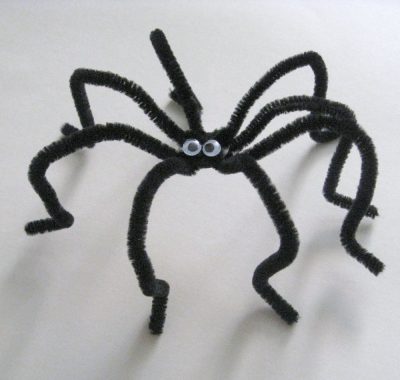
Googly eyes optional...

Complete with water spout for reenactments!

It's also possible to go back and use those songs and videos from the Old Mac Donald Had a Farm lesson as revision. Recycle, recycle, recycle!

Monday, 28 October 2013

Halloween with Very Young Learners

Hooray, hooray. It's that time of year when every single lesson you do for a week has a Halloween theme! The good thing about Halloween is that there are loads of resources out there online for free. Dreamenglish.com has it covered when it comes to Halloween. You can find the video and book on the site here. There is also a video of the book AND a video of the dance.


Topic: Halloween

Age: 4-6

Vocabulary: eyes, nose, teeth, scary, happy halloween, pumpkin, my favourite

Procedure:

1. Ask the children in L1 who is going to a Halloween party. Let them tell you about the costumes they want to wear. Then ask them if they know what pumpkins are and why we make them (to scare away witches) I think it's worth spending some time on this to gain their interest.

2. Tell the 'My favourite pumpkin' story with the book. Then sing the song without watching the video but with actions.

3. Using some triangle and circular and cresent stencils (I make mine from thick cardboad) the children make their own pumpkin face, including the eyes, nose and teeth and colour. I give them the outline of a pumpkin to start with.

(Fast finishers could make another or do the pumpin counting worksheet on dreamenglish.com.

4. Watch the video of the this is my favourite pumpkin song and dance (or just do the hand actions if the class is big).

5. Finish the lesson by saying 'Happy Halloween!'


Extensions:

Introduce happy, sad, tired, angry and scared. Ask the children to mime the expressions and then draw pumpkins with those expressions.


Take in sweets and candy and say 'TRICK OR TREAT!'

Monday, 7 October 2013

First Lesson Ideas

Here are some first lesson ideas for that first lesson of the year after the holidays and you can't remember what this teaching thing is all about....

The first lesson is all about to establishing a routine and yourself as a teacher not a friend or 'helper'. This is especially important if you are there just to teach conversation, not as a regular English teacher.


Remember to:
  • get students to write their names on any books or materials. Take photos of students too young to write their names to print and stick on things later.
  • learn students' names (especially the naughty ones!)
  • set rules 
  • establish you getting silence routine
  • establish a points system or behaviour system.
  • establish entering and exiting routine
  • For older students:
  • check/teach  classroom phrases like 'can I go to the bathroom please?' and simple instructions eg. 'read'
  • check stationery and classroom vocabulary
  • practice English Only routine, for older students.
  • review alphabet and spelling, (especially the letters A,E, I and Y if your students are Italian)


If you have time ice breakers are fun to do with older students, but definitely need to be preceded with rules about how to participate.
  • Swap business cards mingle (How are you? I'm....)
  • Find someone who...
  • The memory name game (I'm Laruchka the lemur, this is Eleonora the elephant...)
  • Throw the ball or soft toy with questions and the student who catches answering.
  • Pass the pen 'microphone' around the circle (a variation on throwing a ball or soft toy).
  • Passport control roleplay. They can prepare it in pairs and at the end of the lesson on their way out they can role play with you the teacher.
Students love to learn something about their teachers:

  • Spelling dictation with personal information, eg. L.A.R.U.C.H.K.A and M.I.L.A.N. Students then guess what relevance those words have for you.
  • Students can write questions for you on slips of paper and you will only answer if they are gramatically correct.

If you want to do something crafty make mini origami 'all about me' books with an A4 sheet of paper or passports. Read them out (without mentioning the name!) and the class must guess who they belong to.